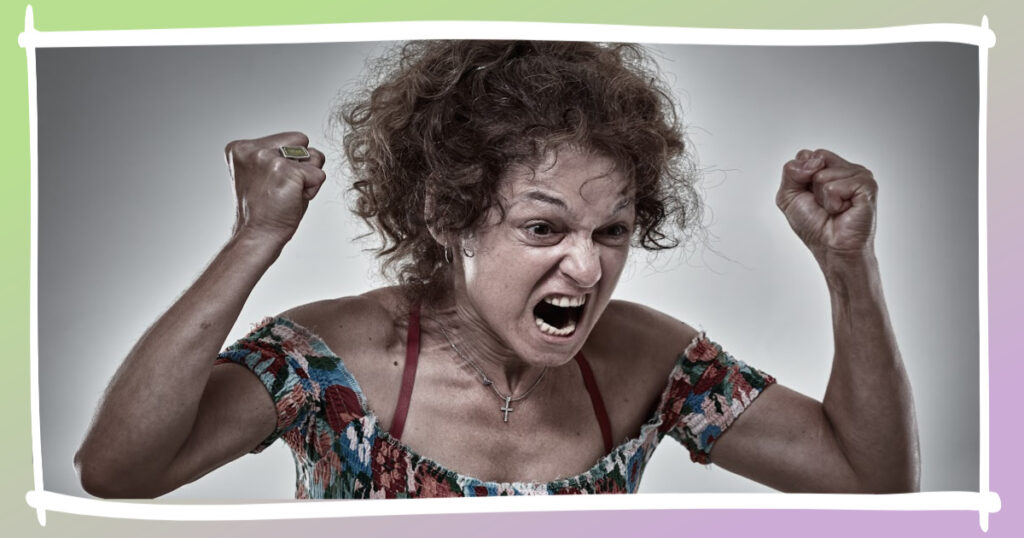
I recently read a post on Instagram about how rage is a trauma response. I was talking to a friend about it and she said, “yeah, but you’re a yoga teacher. You must have all sorts of tools to combat rage.”
And, yes, I do. But, the truth is, even as a yoga and mindfulness teacher, I’m still a human first. And rage is an emotion I dance with from time to time.
Like, the time my younger son misplaced his school ID on the 2nd week of school. The ID is stapled to a book and is required for entrance into and exit from the school building.
I had sat with him the day before and watched as he organized his stuff. He had the book with him. But, the book was mysteriously gone the next morning and he had to leave for school in 30 minutes.
I lost my shit.
I could blame a lot of things: Hormones. A bad night’s sleep. Full moon and mercury retrograde. The undefined heart center in my human design with its shadow of feeling unworthy.
If I spent enough time, I’d wrap myself up in a weighted blanket of pity and make myself out to be the helpless victim who was unable to combat all the forces of nature that had conspired against me at that moment as my son panicked over his lost book.
(Woah is me. Someone get me my fainting couch!)
I’ve felt this experience before and I know I am not the victim.
When I get to that place where my voice raises, I dissociate. I, literally, see myself scream. My brain starts fighting itself: one side telling me that I’m overreacting; the other side getting angrier because everyone else isn’t reacting as seriously as they should.
And, while the compassionate part of myself knows I could walk away, take myself out of the situation and calm down, this only exacerbates the fight inside my head. If I walk away it’s proof that I’m not needed. And, if I’m not needed then what value do I have?
It’s a thought tornado rooted in trauma. I grew up in a house watching this pattern unfold on a regular basis. I promised myself I wouldn’t fall into the trap when I became a parent. That I would heal myself and not project my insecurities and bad mood on my children.
But, I didn’t learn how to be any different. I did have consistent models that showed me how to heal from and release the trauma.
I made a promise to myself that I would do better.
My first real exploration of self-help tools was when I was in public health grad school. I was volunteering as a member of the Health Information board for an addiction recovery program. The board was made up of public health professionals, students, and members of the in-patient community who were nearing the completion of their treatment.
The community members taught me the acronym HALT.
It stands for:
HUNGRY 😋
ANGRY 😤
LONELY 😔
TIRED 😴
These four “risk states” affect your mood and behavior. They are signs that your body is OOG (out-of-gas) and more susceptible to going into fight, flight, or freeze in response to external stimuli.
Like your kid refusing to eat their vegetables or misplacing an important book. Or your boss sending you an email marked “URGENT” on Friday at 4:54pm.
You’re gonna need a whole mindfulness toolbox!
The HALT method is a really good tool to practice on a daily basis. Take time and check in with yourself regularly. Are you feeling hungry, angry, lonely, or tired? How can you resolve those feelings before you snap and say something you’ll regret?
As a parent, it’s also a great tool to teach your children. Lead by example. Check-in with your kids. When they break down after school or pick a fight with a sibling, it’s quite likely they are feeling hungry, angry, lonely, or tired. Ask them to reflect on what’s going on inside. What do they need at the moment?
I call these tools CALM THE CHAOS exercises in my monthly column for Soulacy Magazine. They are part of the life-long work we do – with practice, patience, and self-compassion – to embody the higher version of ourselves. The calmer version of ourselves.
And I also have a toolbox full of MELLOW THE MIND activities. These are those tools you can pull out in the moments when the shit hits the fan. Tools such as breathwork. As a child, I remember an episode of Sesame Street where one of the muppets got angry and screamed and threw a tantrum. And, the celebrity guest told them to “take a deep breath and count to 10”.
Conscious breathing stimulates the parasympathetic nervous system, which signals our bodies to “rest and digest”. Counting to 10 is a great tool. Personally, I find that a deep inhale through my nose and a powerful exhale through my mouth helps me more. The forcefulness of the exhale, coupled with the white noise sound of the breath as it is released soothes my brain more quickly.
If you carry guilt and shame of losing your sh*t, know you’re not alone.
I’ve spent many years and a lot of money trying to unlearn the unhealthy patterns that were planted in me as a child. I have learned, created, and adapted Calm the Chaos and Mellow the Mind tools that soothe the nervous system so I can stay out of fight-or-flight when these scenarios arise. And, most days, my tools work.
But, some days, well, I explode. And then I have to deal with the consequences.
With the pained look in my son’s eyes. The knowledge that I am planting those same seeds in the trauma centers of his body that were implanted in mine.
I hope that I’ve done enough work on building a strong foundation of respect, compassion, and love in our relationship that those seeds won’t take root. That he’ll understand that we all lose our shit sometimes. That I was frustrated by the behavior, not him. I love him.
I hope he’ll forgive me. And that I’ll forgive myself.
Until then, I take it one step, one breath at a time and I hope you do too.

Are you prone to raising your voice and wish you could stop yelling but still be heard? Learn the #1 tool that I use to reduce my stress level in chaotic moments so I can communicate more consciously and compassionately. (As long as I remember to practice it! 😜)
Sign up here:
And, if you’re ready to dive deeper into creating your toolbox of mindfulness practices and you’d like a safe space to experiment, practice, and be receive accountability, I offer a 1-month or 3-month coaching package. Let’s talk! You don’t have to figure it out alone.